Why Some Assembly Lines Remain Stable
While Others Constantly Struggle
A wide variety of variants, volatile production schedules, and rising cost pressures are making assembly planning more complex than ever. The key insight is the same for everyone:
Most problems don’t arise on the production line . They arise even before that, during the planning phase. Compare this to your industry now:
Do you already know what steps you need to take? View the Performance Quick Check
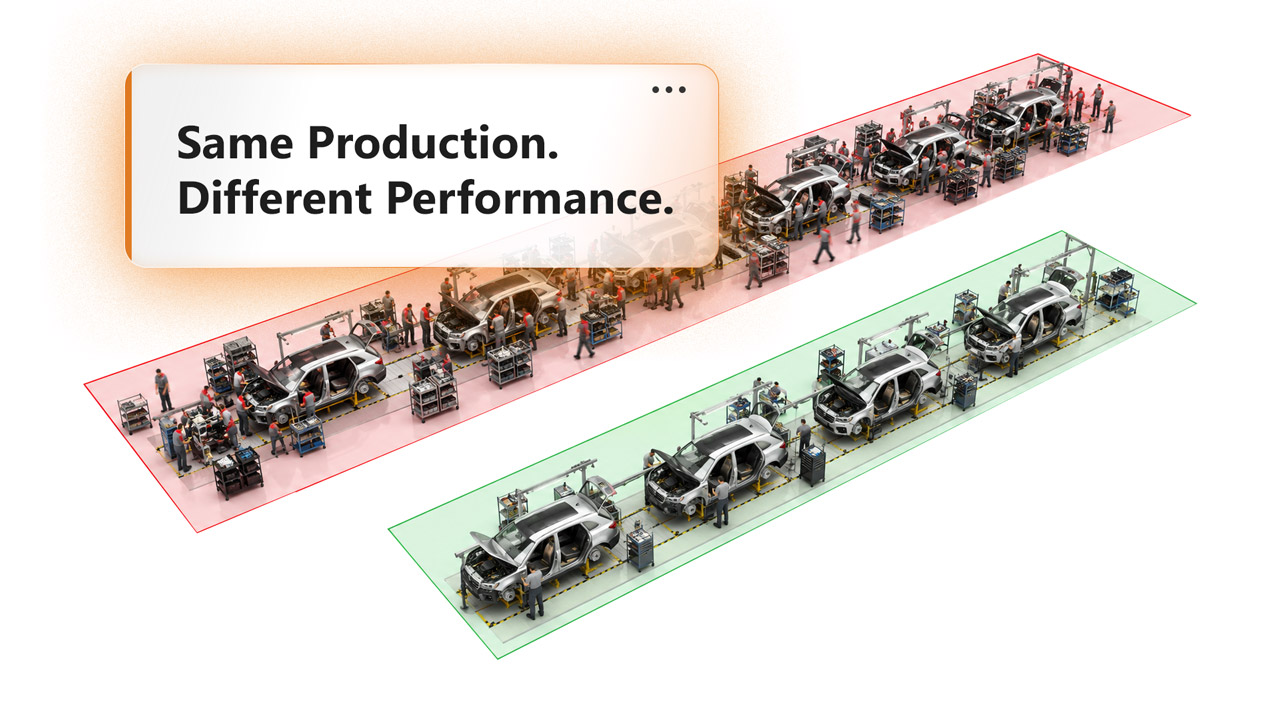
AI helped create the visuals























Already benefiting from TAKTIQ
The Problem Is Rarely An Isolated Incident. It Is Structural.
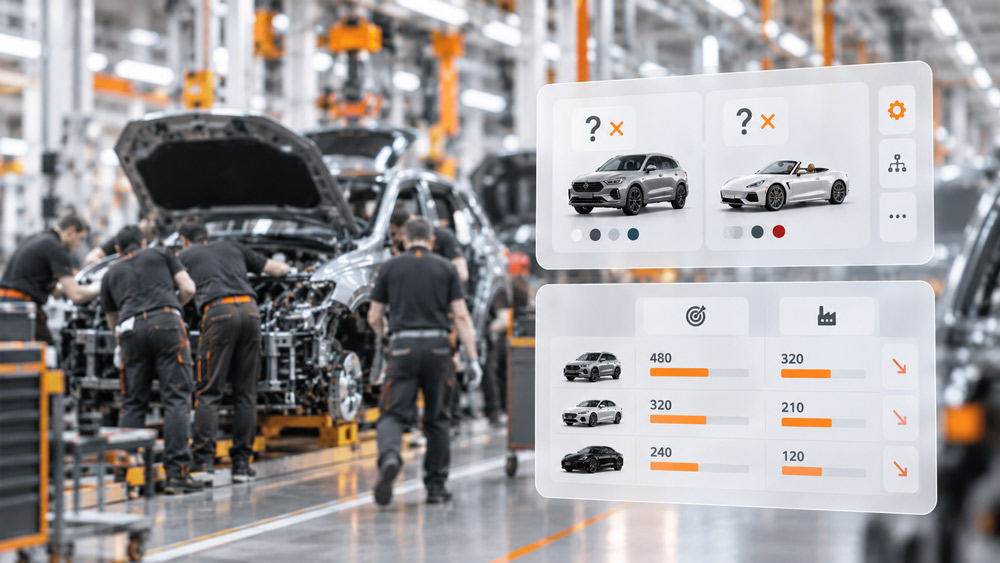
- New variants always spark new discussions
- Production targets are not being met
- Bottlenecks aren’t noticeable until they reach the production line
Most companies treat these issues as separate problems. Often, however, they are merely symptoms of the same underlying cause.
The True Cost of Uncertainty in Assembly Planning
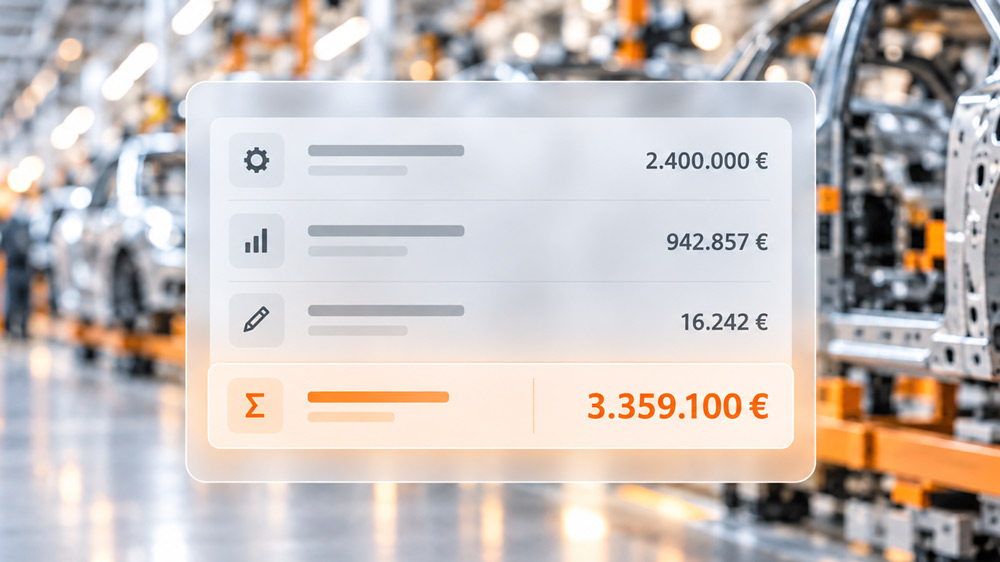
If no one can provide a definitive answer as to which variants cause time spread, which rules are actually effective, or which stations are operating at capacity, costs will arise in many areas simultaneously:
Productivity. Stability. Planning effort. Staffing requirements. Delivery capability.
The Questions Almost Every Manufacturer Asks
- How do we compare?
- How do other companies manufacture their products?
- How much money do we leave on the table each year?
Download the Balancing Benchmark now and benefit from exclusive insights and practical tips!
Compare Economic Potential

Compare Work Methods and Challenges

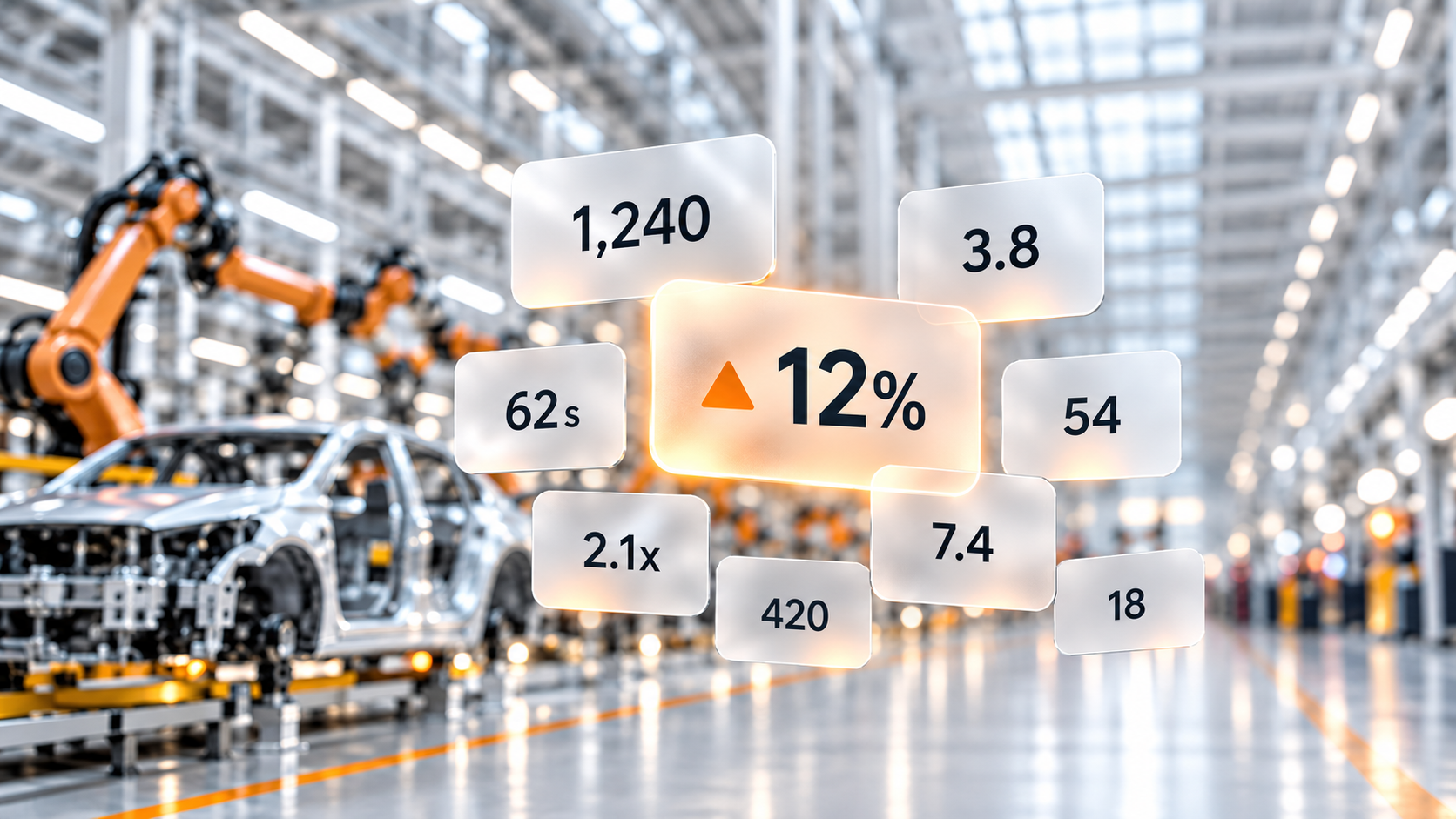
Comparing KPIs in Modern Assembly Planning
Leading Manufacturers Do Not Rely On Assumptions
Successful assembly planning rarely comes down to more experience or better employees. What sets it apart is that key decisions are based on transparency rather than assumptions.

They understand the big picture
You will recognize the actual impact that variants, restrictions, order programs, and rules have on your production.
They assess the impact before implementation
Changes are not discussed but are evaluated objectively before they are implemented on the front lines.

You make improvements systematically rather than reactively
Optimization becomes a predictable process rather than a reaction to problems.
Download Benchmark for free
The Line Balancing Benchmark contains the following information:
- Typical cycle time, number of stations, workers, tasks, models, and volume by industry
- What are the most common challenges across all industries?
- What use cases, systems, and time-tracking methods do other manufacturers use?
- What economic opportunities does this present (business case by industry)?
- Five measures that can be implemented directly in line balancing
Our Customers Agree
Maximilian Remmele Head of work preparation at Kramer-Werke„TAKTIQ is indispensable for us because it creates transparency, digitally maps our employees’ knowledge and noticeably increases capacity utilization. From our point of view, there is no better software for line balancing. “

Dr. Björn Boßman Head of Planning Assembly at Mercedes„With TAKTIQ’s interactive line balancing, we save a lot of time in line optimization. Maintaining process requirements directly in the software ensures that solutions can be implemented in practice. The flexible simulation of various line balancing scenarios and order programs with TAKTIQ saves us additional time and creates transparency for well-founded decisions. “

Thomas Felder Production Planning and Control„For us, TAKTIQ is a helpful tool for making production data understandable and actionable. Potential opportunities and anomalies become apparent more quickly, allowing us to take more targeted action. This supports the continuous improvement of our processes. “

Mike Appenmaier Head of Process Planning at Dethleffs„TAKTIQ helps us to visualize tasks and processes. We recognize where waste occurs, can specifically evaluate special orders and continuously improve our production times. This creates transparency and makes fluctuations manageable. “

Raimund Schwierz Product Owner PP & WFM at CLAAS„Considering the complexity of the software, it is surprisingly easy to use. Overall, it is very intuitive and, in my opinion, the best solution on the market. I particularly appreciate the fast support – there is always a quick solution to any queries. “

Dominik Hammerl Global Lead Manufacturing Innovation at AGCO„TAKTIQ makes our assembly and order planning more transparent, intuitive and faster. With constant changes to cycle times, product mix and assembly rates, TAKTIQ allows us to maintain an overview and avoid bottlenecks in the assembly line despite high capacity utilization. Finally, we always have a sympathetic ear when it comes to implementing new software requirements and ideas. “

Dawid Weremiuk Vehicle Production Planner at Porsche„TAKTIQ brings structure, transparency and speed to our planning – with the same precision that we at Porsche expect on the road.“

Do You Want To Do More Than Just Compare? Do You Want To Discover Your Specific Potential?
In the Performance Check, we analyze your current situation, identify the key areas for improvement in your line balancing, and highlight where productivity, stability, and planning efforts can be enhanced.
- Check whether your data is suitable for the Quick Check
- Preliminary Assessment of Potential and Benefits
- Determine which insights would be relevant to your situation
Schedule an appointment and find out what’s really possible
What exactly happens during the Performance Quick Check? Learn More
Trusted By The World’s Most Complex Manufacturing Environments
More than 6,000 enthusiastic users are already realizing the full potential of their production with TAKTIQ. Here’s how our software is making a difference for our customers worldwide:
1 sec.
to automatically generate millions of solutions
12 %
average increase in efficiency
50 %
average reduction in planning effort
100 %
Less time wasted on guesswork