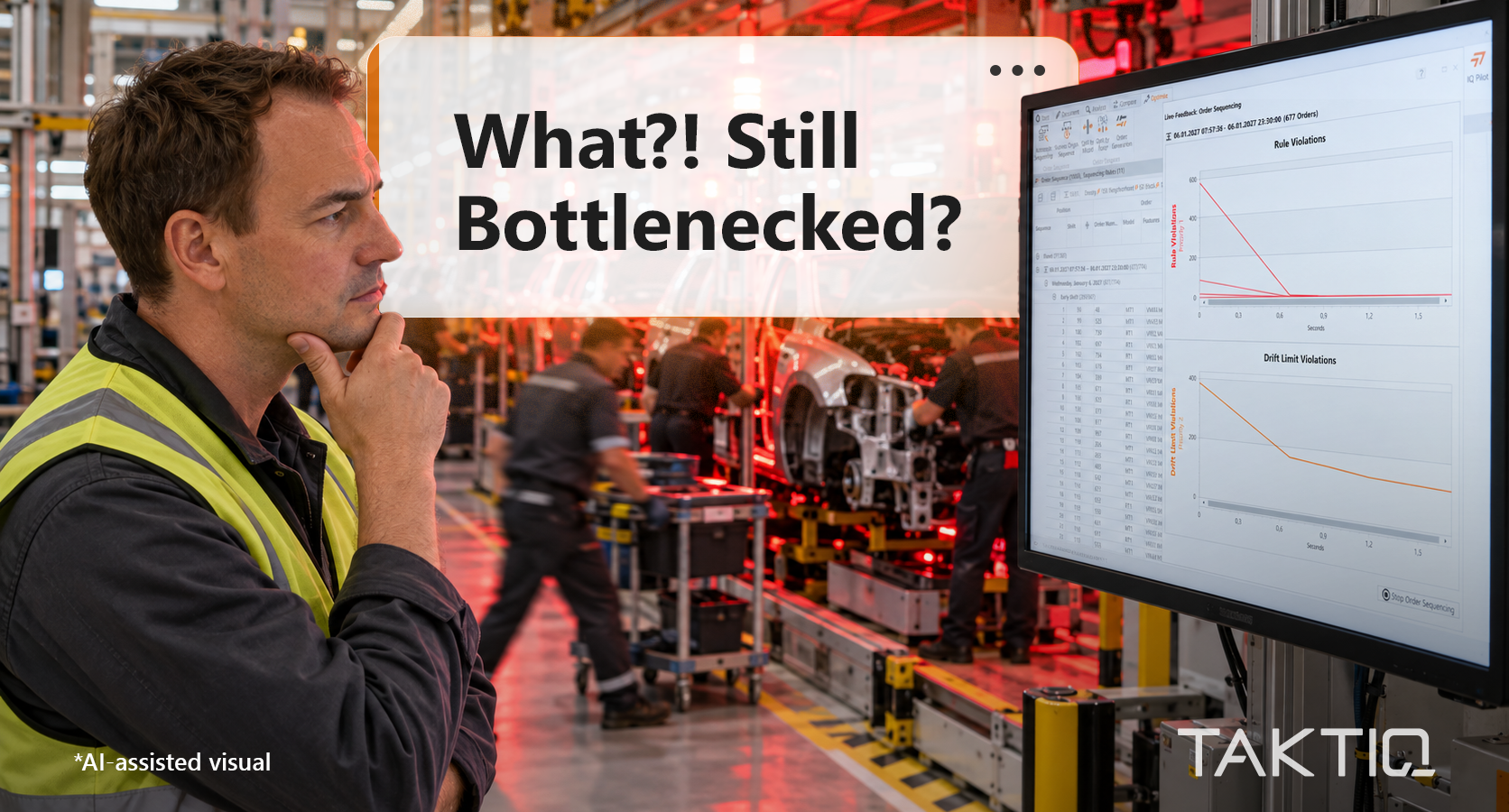
Bottleneck Despite Line Balancing: Overload on a Balanced Line
A bottleneck can occur despite proper line balancing if line balancing is based on an average workload and does not adequately reflect the variant mix over time. If several labor-intensive variants then arrive at a station in quick succession, the workload for these orders exceeds the cycle time, even though the average utilization remains within the cycle time. The problem can be addressed in two ways: through line balancing, which must account for the variant mix, and through the sequence in which orders enter the line.
Variant Mix Over Time: Why Individual Orders Exceed the Cycle Time
What matters is not the average utilization, but the workload of the individual orders in their actual sequence. Each variant involves a different workload at a given workplace. If several variants with high workloads are processed directly one after another at the same workplace, the workload for these orders exceeds the cycle time. The work drifts into the next cycle or the next workplace, creating a bottleneck. A utilization rate averaged across all variants remains unremarkable in this case because it does not reflect the time spread. Typical signs include cycle time overruns only for certain variants at the same workplace, recurring drift, rework, and unplanned use of fill-in workers.
Line Balancing and Sequencing: Two Different Levers
Both levers address different root causes. Line balancing assigns work tasks to workplaces and must therefore reflect the variant mix and its frequencies, not just an average. The better it accounts for the variants, the more it reduces the time spread beyond the cycle time; however, it cannot eliminate it entirely. Sequencing determines the order in which orders enter the line and prevents labor-intensive variants from following one another immediately. It does not reduce the workload of an individual order. Because neither line balancing nor sequencing is sufficient on its own, both must work together to be effective.
In the long term, line balancing thus becomes a management tool. It links planning and operations, makes workloads understandable, and ensures that decisions are transparent. The cycle time remains the fixed framework. However, production stability is achieved through the continuous maintenance of the work structure within this framework.
Frequently Asked Questions About Production Planning
Line balancing assigns individual tasks to the workplaces on the assembly line, thereby determining or adjusting the cycle time and worker capacity for each workplace. Sequencing analyzes and optimizes the order sequence, i.e. the sequence in which orders pass through the line. Line balancing thus determines the assignment of tasks to workplaces, while sequencing determines the order of orders over time.
A carefully planned sequence prevents labor-intensive variants from following one another directly. The backlog from a labor-intensive variant is cleared during the subsequent, less time-consuming variants before it accumulates into a bottleneck. It is normal for a single variant to exceed the cycle time, and with the right sequence, this is even intended. The sequence only reaches its limit when the average workload at a workplace across all variants exceeds the cycle time. In that case, only line balancing or additional capacity can help.

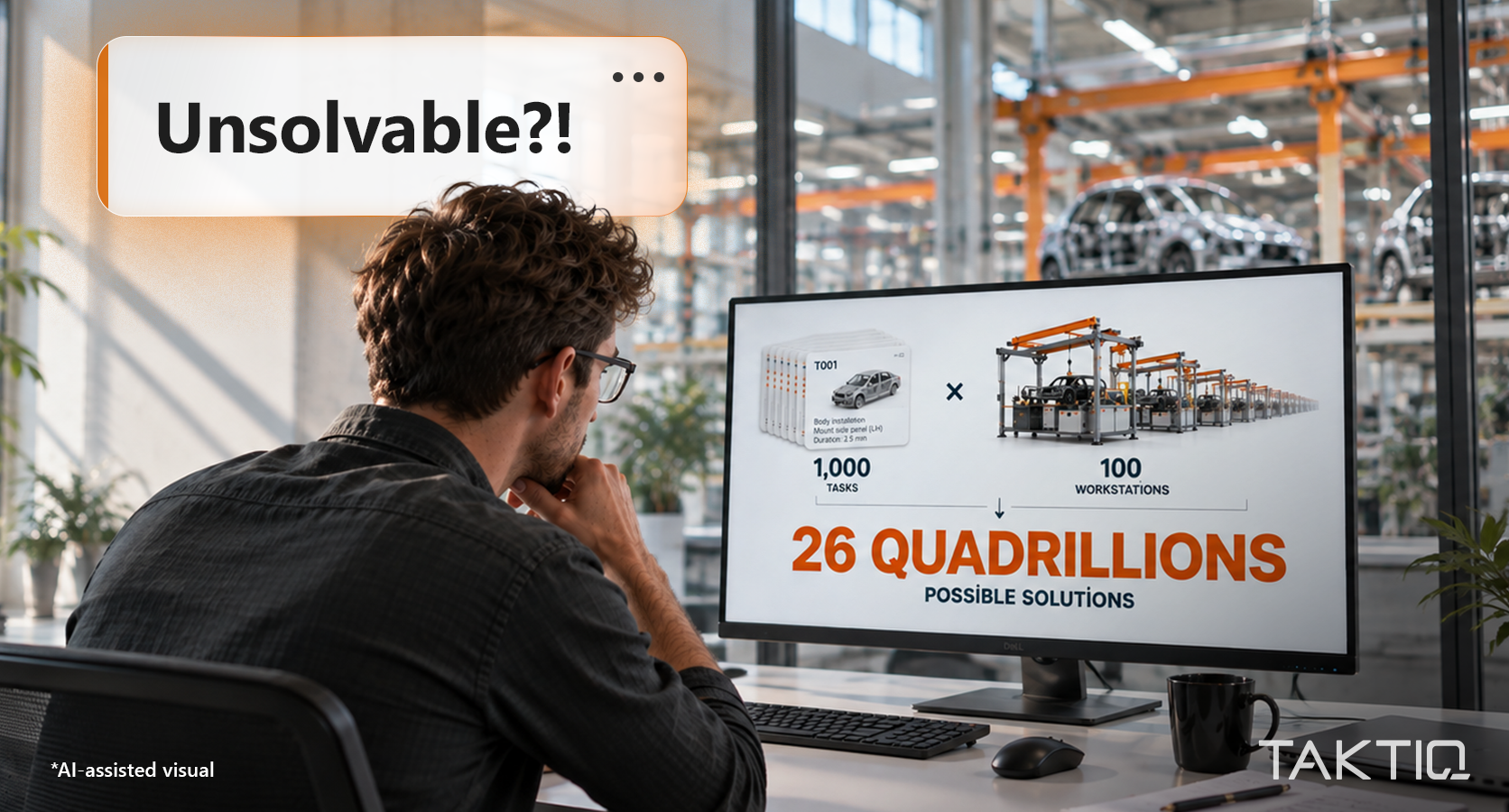
Line Balancing in High-Variety Assembly: Why Manual Planning Has Its Limits and What Data-Driven Line Balancing Can Achieve.
Learn More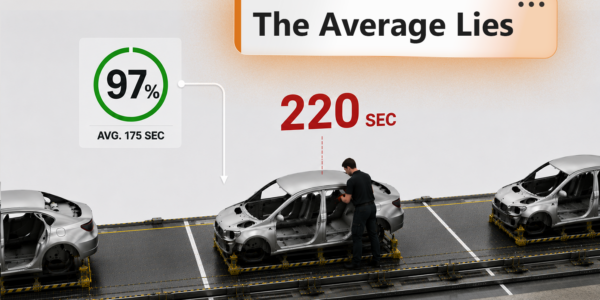
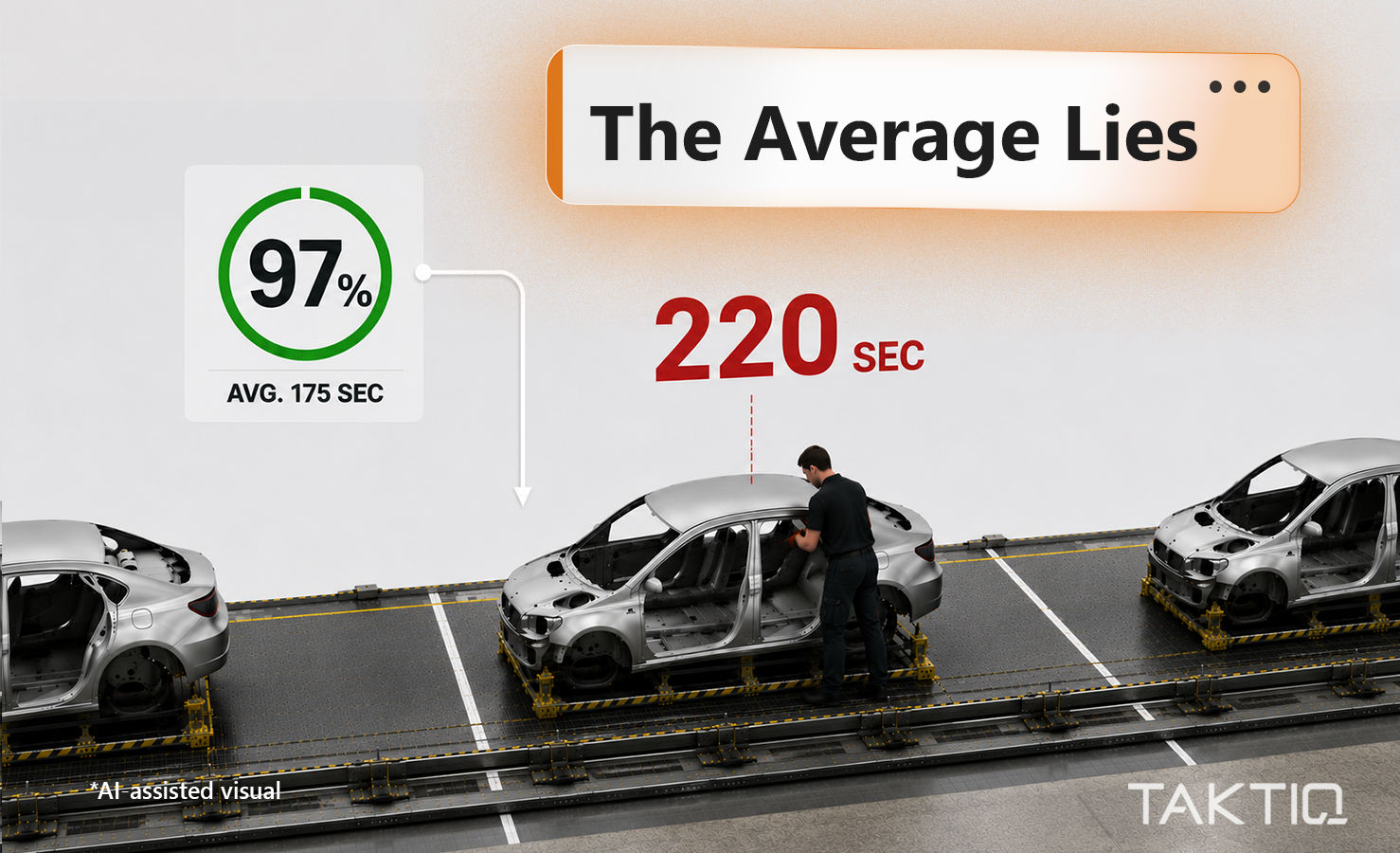
The cycle time sets the pace of an assembly line, but it is not the sole factor determining the line’s stability. Especially on lines with a wide variety of products, a station may operate below its average capacity and still be regularly overloaded. The difference between a line that is only theoretically at full capacity and one that is truly stable lies in line balancing.
Learn More
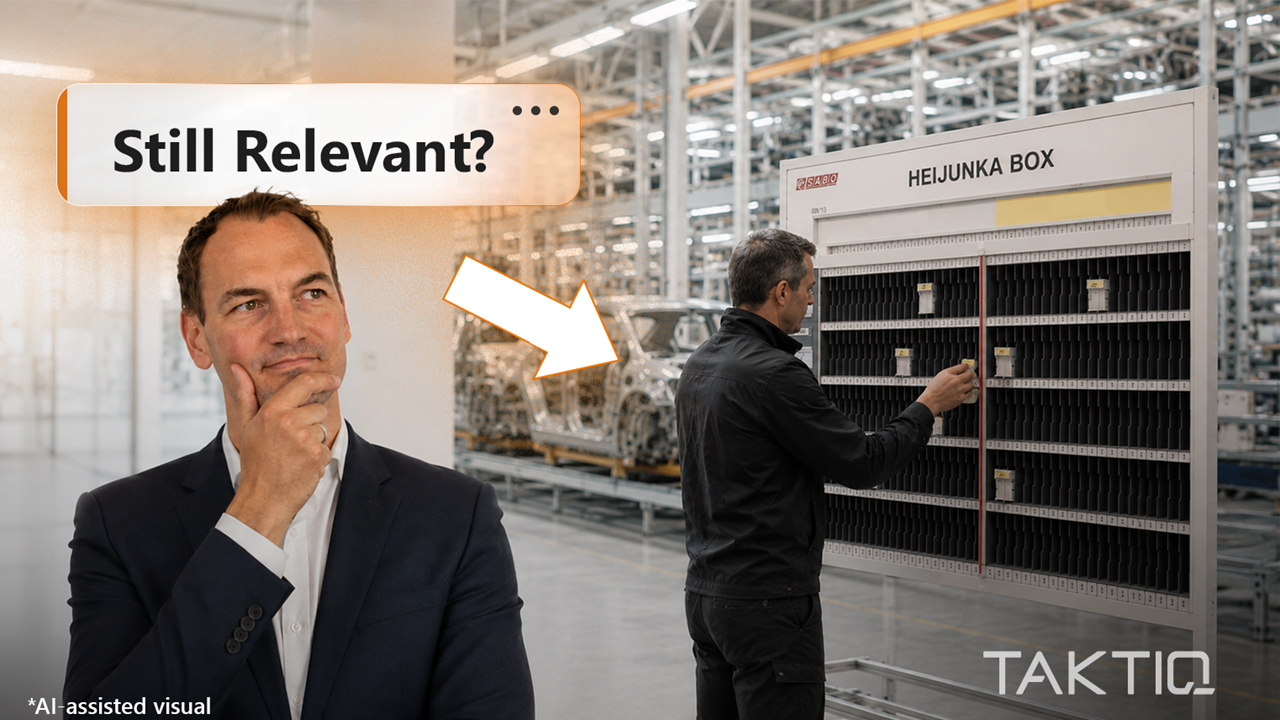
Why traditional lean tools reach their limits when there is a high degree of product variety, and why line balancing becomes the foundation for effective lean initiatives.
Learn More