Line Balancing in High-Variety Assembly: When Traditional Planning Reaches Its Limits
Line balancing in high-variety assembly seems, on paper, like a simple distribution task: Work must be distributed among the stations so that no one is overloaded and the cycle is maintained. However, in a production environment that sends a wide variety of variants, equipment options, and customer-specific configurations down the same line, this picture quickly loses its validity. What needs to be done at a station depends on which variant is currently passing through. Work tasks, sequences, resources, ergonomic evaluation, and cycle times must all align simultaneously across all variants. The task of allocation thus becomes a planning decision that balances product, process, and people. This is precisely where it is determined whether line balancing works in practice or only on paper.
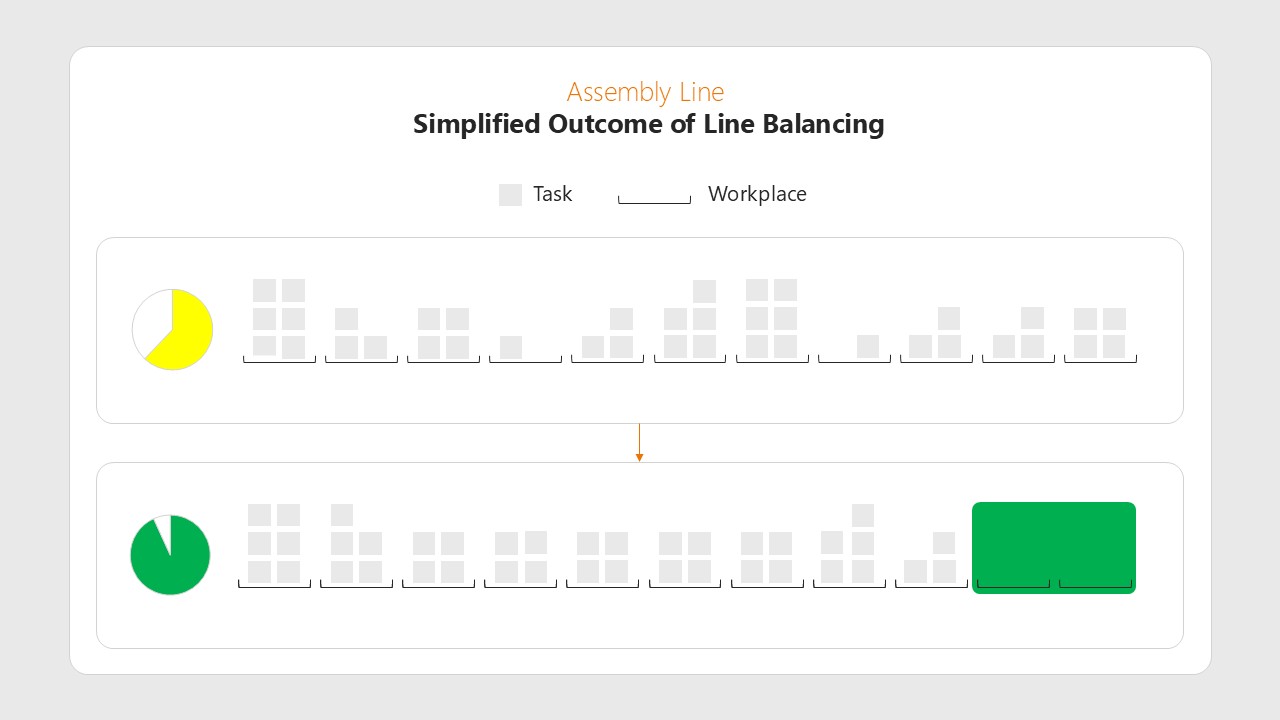
In technical terms, line balancing refers to the assignment of individual tasks, along with their production factors, to the stations on a line while adhering to precedence relations, cycle time limits, and other constraints. In variant flow production, this becomes the supreme discipline, because the same station performs very different operations depending on the product variant, and its workload fluctuates significantly as a result.
The Limits of Manual Line Balancing
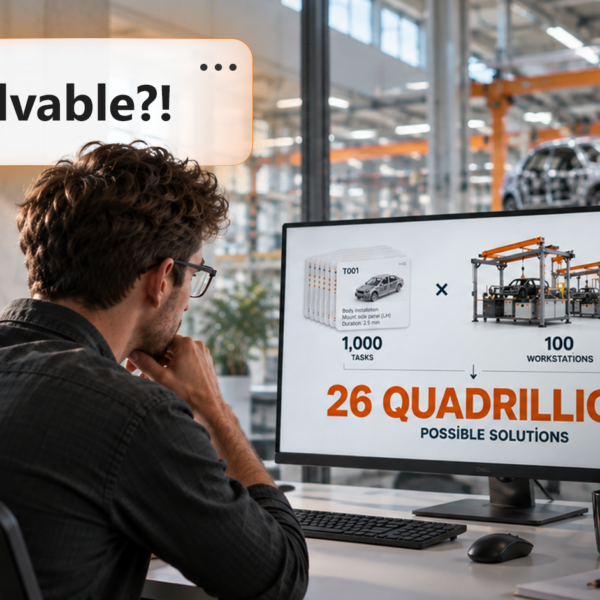
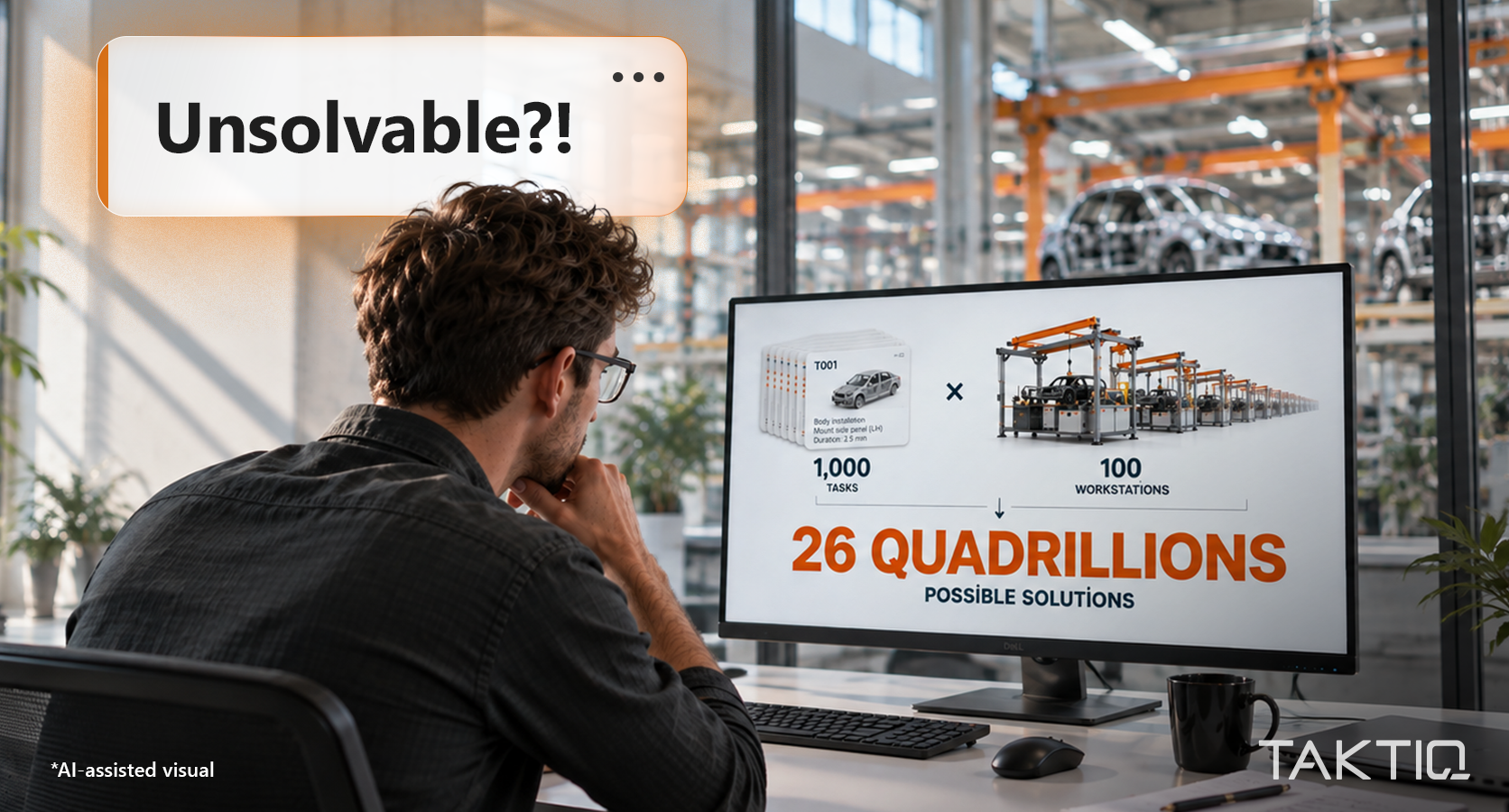
The first reason why this task defies pure experience is simply combinatorics. Even a small configuration consisting of 20 tasks and five workplaces yields 24,225 possible combinations. If we scale this up to a realistic production line with 1,000 tasks and 100 workplaces, the number of conceivable assignments grows to over 26 quadrillion. Such orders of magnitude cannot be grasped at a glance or tested manually, and in mass production, they are not the exception but the norm.
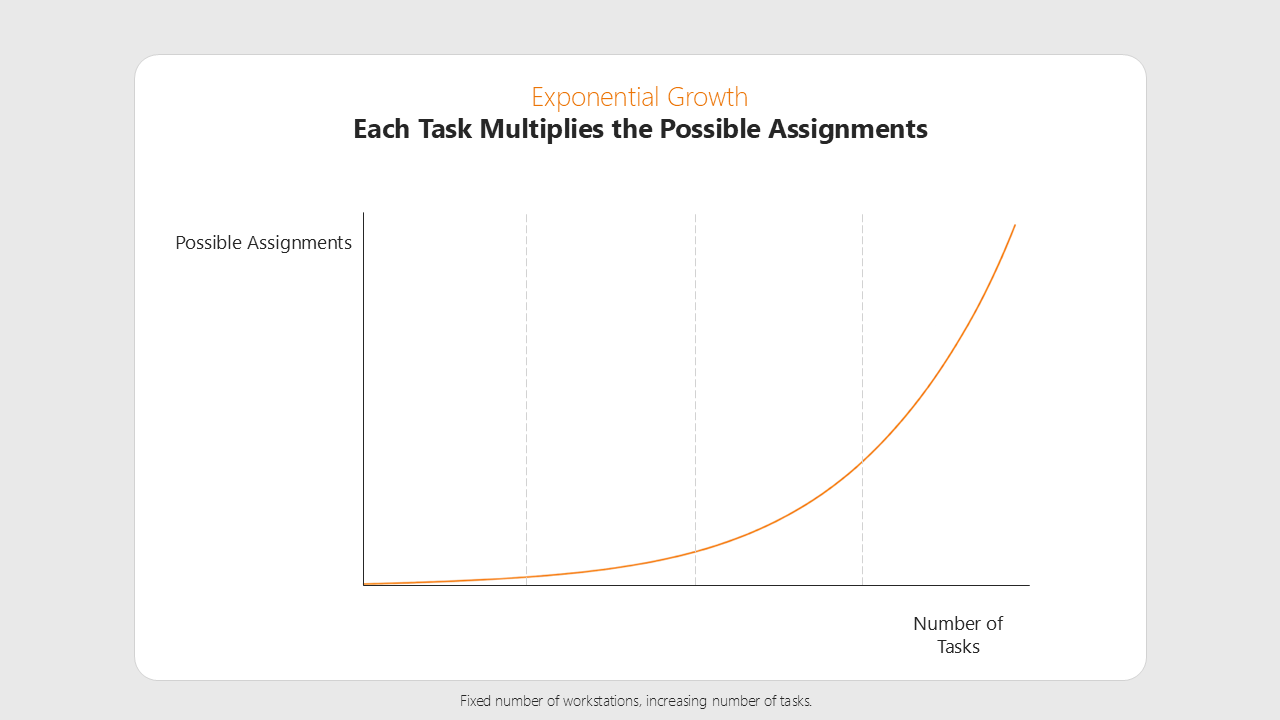
The real fallacy, however, lies not in the quantity, but in the assumption that the goal is simply to find any valid solution. There are many valid solutions in this world of numbers. What we’re looking for is the one solution that is technically feasible, ergonomically sound, efficient, and stable during operation. This combination cannot be found by trial and error, but only when computing power is used specifically as an aid.
Why Capacity Optimization Alone Is Not Enough
Anyone who treats line balancing solely as a capacity utilization problem ends up with solutions that look good on the screen but fail on the shop floor. Mathematically, a task can easily be moved to another station as soon as time becomes available there. Whether the right tool is available at that station, whether the worker can even reach the component, or whether the body posture remains reasonable, a pure capacity utilization model knows nothing about these factors.
For a model to yield reliable results, it must take the logic of the production floor into account. This is precisely what the process requirements define. Predecessor-successor relationships determine which task must precede or follow another. The working positions describe height, accessibility, and body posture, while tools, equipment, and auxiliary materials define the requirements at the workplace. Added to this are fixed points in the production hall, the ergonomic strain on workers, and operational restrictions such as drift limits.
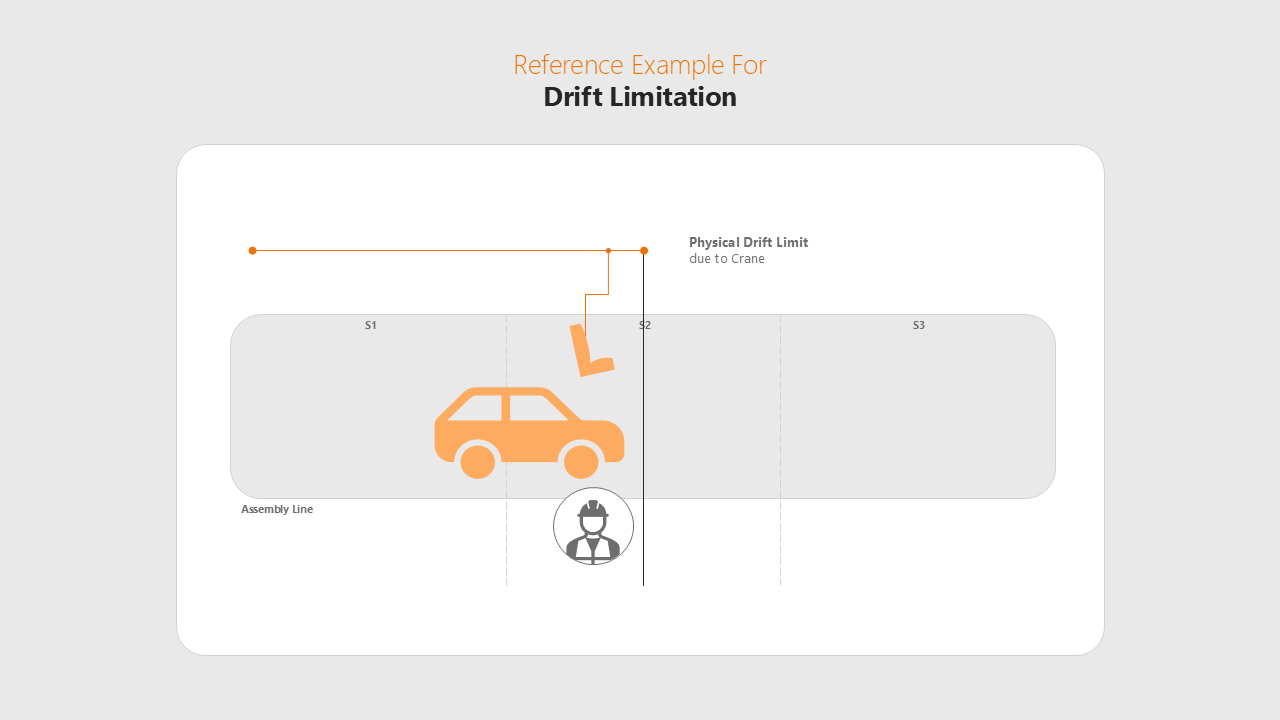
Without this process logic, sequences result in which the product ultimately cannot be assembled at all. Data-driven line balancing must therefore never consider technical, organizational, and ergonomic constraints in isolation, but always in conjunction with one another.
Data-Driven Line Balancing in High-Variety Assembly
Once this logic is incorporated into the assembly line, it becomes a model that can be simulated. Changes, utilization, and constraints can be visualized in advance, and alternatives can be systematically weighed against one another. The benefits are particularly evident in situations where the sheer number of possibilities has long since become impossible to manage manually.
TAKTIQ takes a different approach than completely recalculating every variant. First, the current state is evaluated. The software then specifically determines the delta changes relative to this initial state, making it immediately clear what effect a single move has. The evaluation follows a clear ranking system. Priority is given to overloaded workplaces and exceedances of the “Max-Variant-Limit”, that is, the maximum permissible station load across all variants. Only then do time spread, utilization, and the necessary moves for rescheduling of tasks come into play. If a solution does not improve a high-priority criterion, it is not pursued further. This keeps the evaluation fast and leads to proposals that are computationally efficient and, at the same time, operationally feasible.
Better Decision-Making Foundations Instead of Pure Automation
For daily planning, this translates into two approaches. Interactive line balancing with TAKTIQ shows, in preview mode, which target workstations are suitable for a particular operation and what the consequences of moving them would be. Automatic line balancing provides real-time feedback and even suggests optimizations on its own.
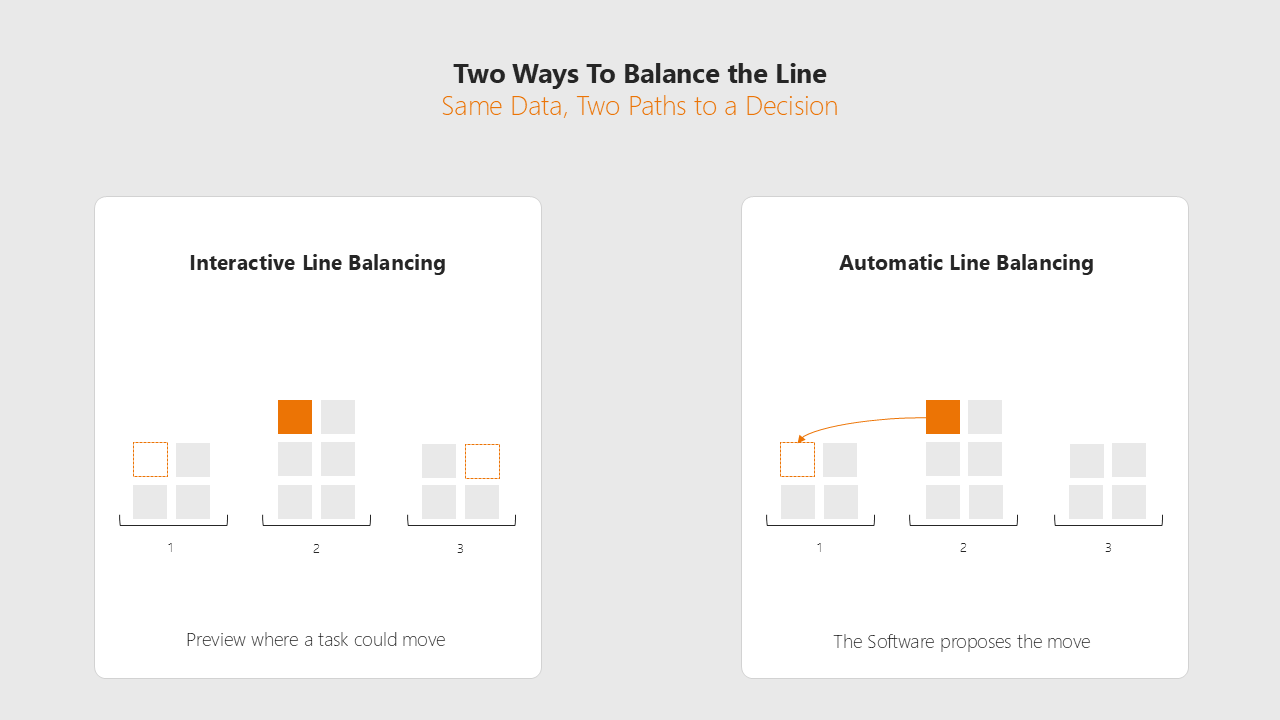
The real benefit, therefore, does not lie in the fact that software takes over the planning. It lies in the fact that planners can make decisions based on better information. Alternatives can be compared, constraints become apparent early on rather than only at the start of production, and the production line can be made more stable, more efficient, and more people-friendly step by step. In a manufacturing environment where the sheer variety of options has long since outpaced the limits of traditional planning, this is the decisive difference.
Frequently Asked Questions About Production Planning
Line balancing refers to the assignment of individual tasks to the stations on a line while adhering to precedence relations, cycle time limits, and other constraints. In high-variety assembly, the same station performs different tasks depending on the variant, which is why the workload fluctuates significantly and the assignment process becomes much more challenging.
Even a small number of tasks and workplaces result in a vast number of combinations; the number of realistic production lines reaches a scale that is beyond the scope of any manual review. The goal is not simply to find any acceptable solution, but one that is technically feasible, ergonomically sound, efficient, and stable in operation. Such a solution cannot be reliably identified by hand.
A pure capacity utilization model moves tasks to where capacity is still available, without taking into account tools, accessibility, body posture, and process sequence. If this logic is missing from the production floor, sequences result in which the product cannot be assembled in the end. Technical, organizational, and ergonomic constraints must therefore be considered together.
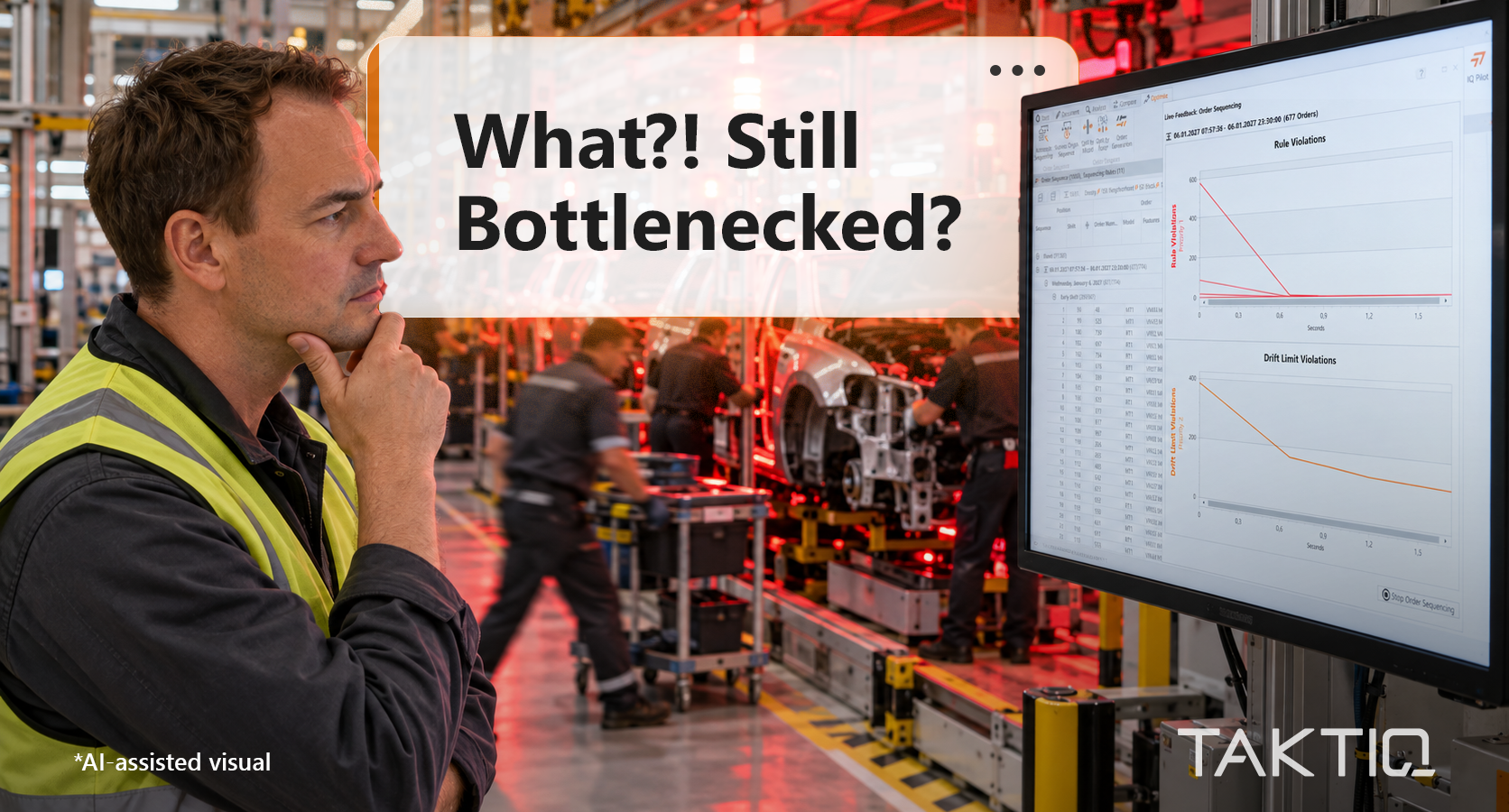
Bottlenecks Despite Line Balancing: Why Individual Workplacees Are Overloaded and How Line Balancing and Sequencing Work Together.
Learn More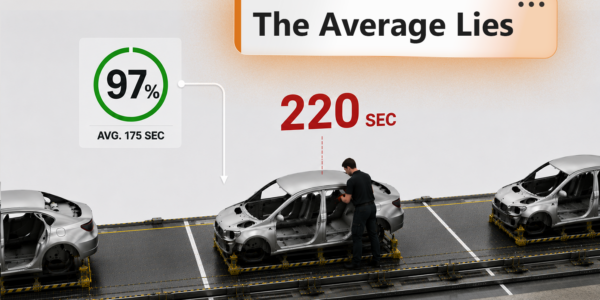
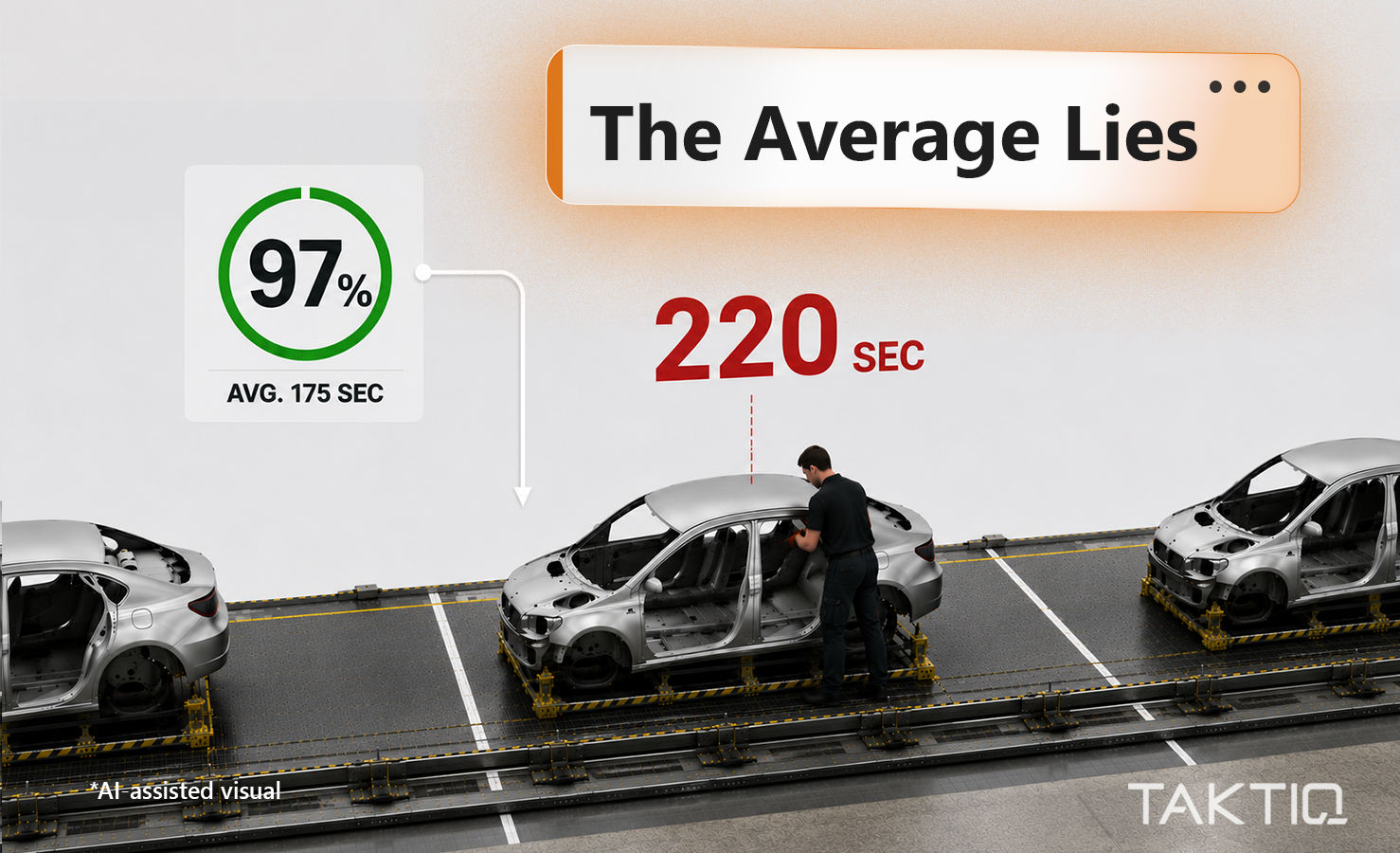
The cycle time sets the pace of an assembly line, but it is not the sole factor determining the line’s stability. Especially on lines with a wide variety of products, a station may operate below its average capacity and still be regularly overloaded. The difference between a line that is only theoretically at full capacity and one that is truly stable lies in line balancing.
Learn More
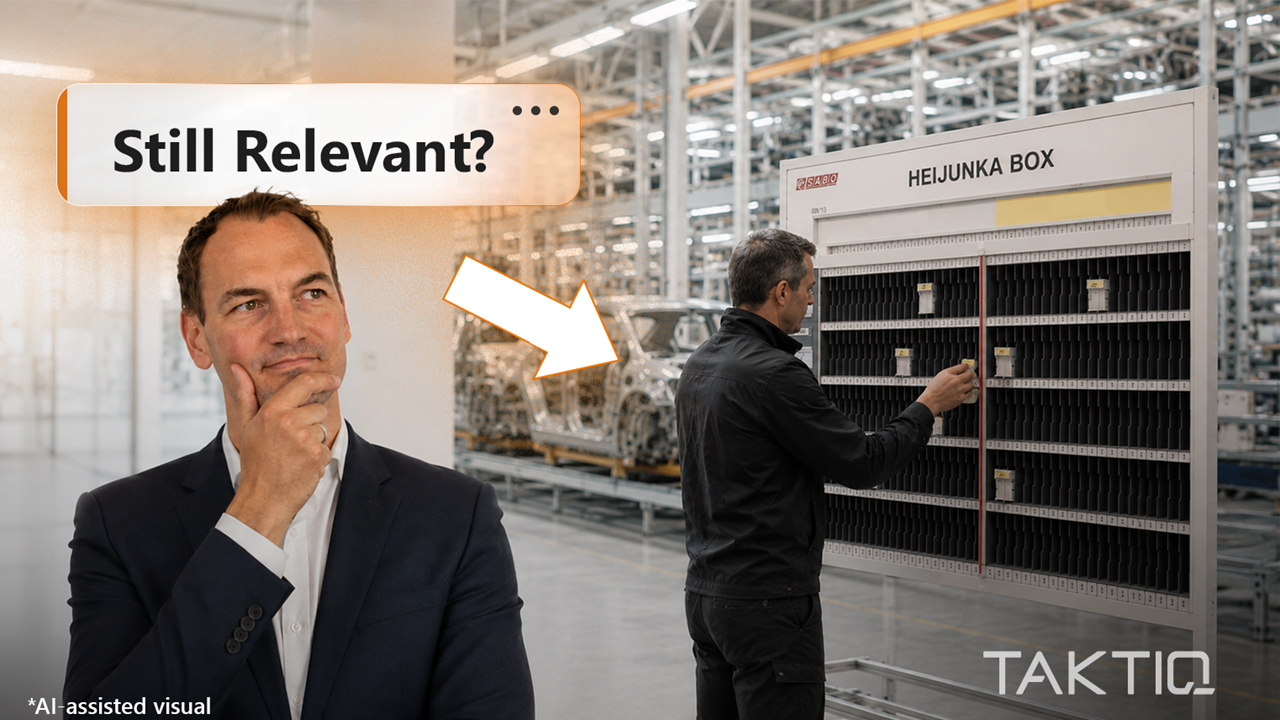
Why traditional lean tools reach their limits when there is a high degree of product variety, and why line balancing becomes the foundation for effective lean initiatives.
Learn More