Variable Cycle in Assembly: When It Helps and When It Doesn’t
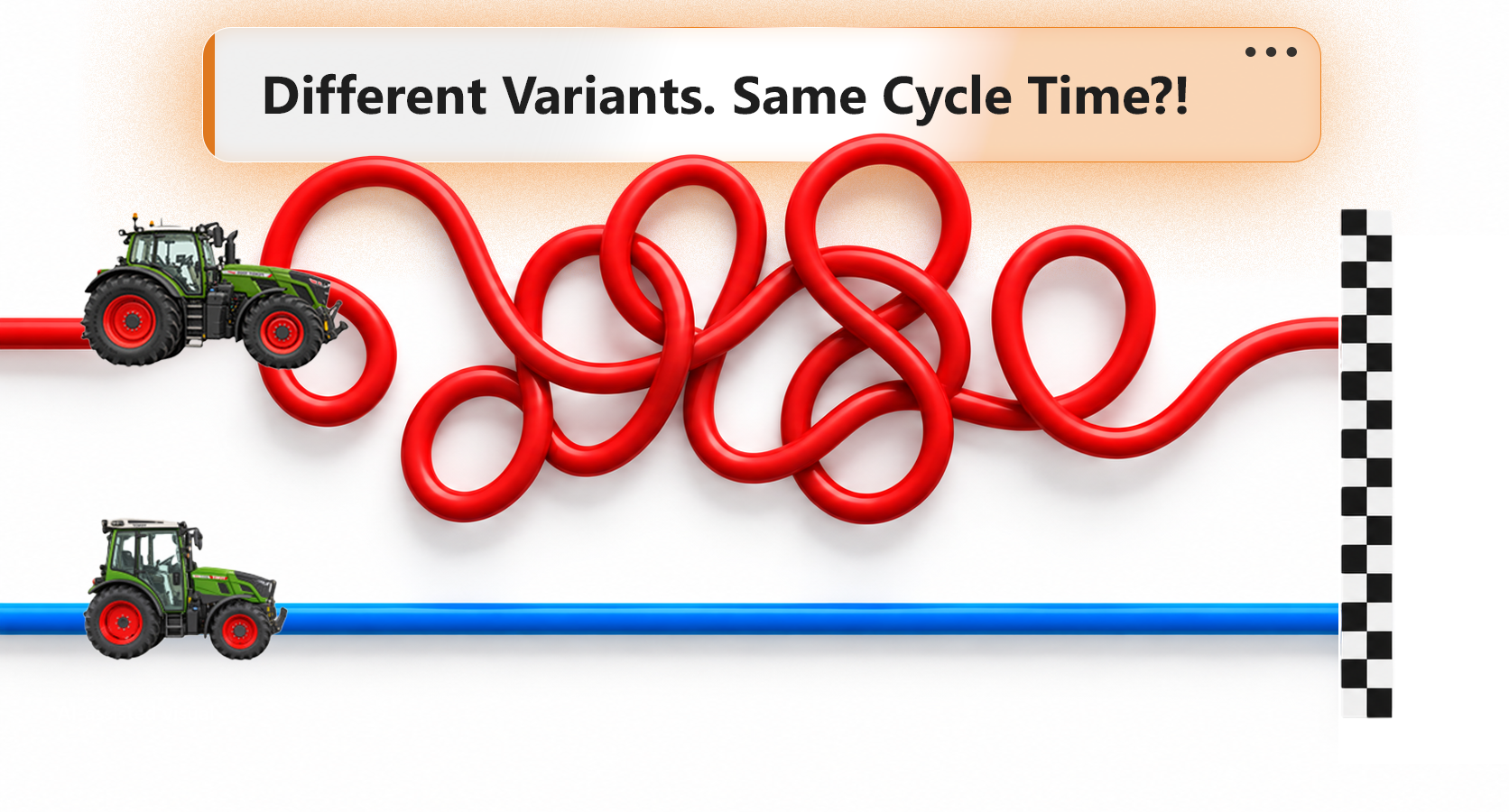
When a manufacturer introduces a new, particularly labor-intensive model on an existing assembly line, work scheduling faces a dilemma: If the cycle time for the entire line is extended, this results in costly idle time for simpler models. If the cycle time is left unchanged, the more complex models risk overloads, ranging from drift limit violations to line stoppages. This is precisely where the variable cycle comes into play. Instead of rigidly setting the line to an average value, it flexibly adjusts the intervals between orders to match the actual assembly effort.
Why a Fixed Cycle Time Can Reach Its Limits with High Model Variety
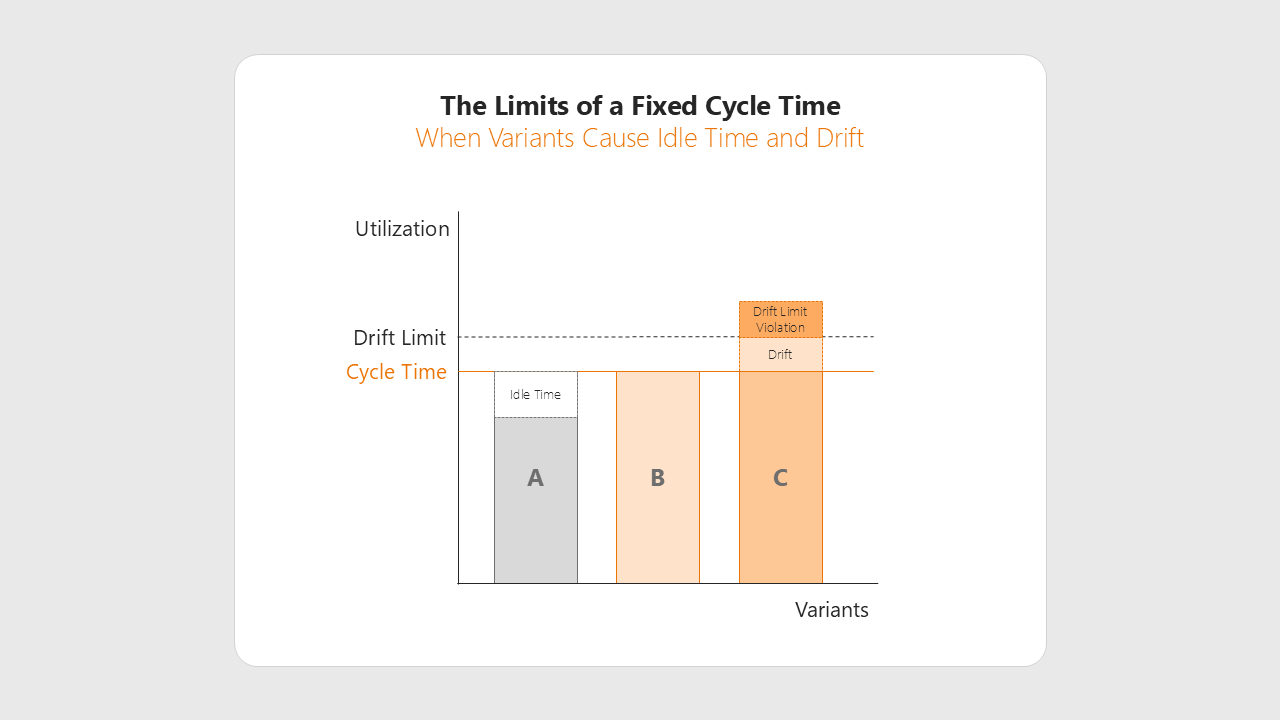
In fixed-cycle production, the same cycle time is available for every order. The greater the time spread between models, the more idle time occurs for orders with low assembly effort and the more drift occurs for orders with high assembly effort. The classic countermeasures address three areas:
- Drift area: A planned operating range outside the nominal station boundary can accommodate individual load peaks.
- Line balancing: It distributes tasks among the workplaces in such a way that the additional effort required for individual variants does not accumulate at a single workplace.
- Sequencing Rules: They prevent several particularly time-consuming orders from occurring in quick succession.
However, as the time spread between the models increases, the requirements for drift areas, line balancing, and sequencing also increase. If the specified drift area is insufficient, the drift limit will be exceeded. In this case, a utility worker must step in; in the worst case, the line stops.
How Variable Cycle Works
With variable cycle time, the conveyor speed of the assembly line remains constant. What varies is the interval at which orders enter the line: the interval is longer after an order requiring more assembly work and shorter after an order requiring less assembly work. Each order therefore continues to spend the same amount of time at a station. What changes is the time the worker has until the next order arrives. The ratio of this time to the station’s cycle time is described by the cycle time factor.
A sample calculation:
Each station is five meters long, and the conveyor moves at a speed of one meter per minute. This means each order spends five minutes in the station.
- A model with a cycle time factor of 1.0 takes exactly those five minutes.
- With a factor of 0.6, the worker finishes in three minutes, and that is exactly when the next order appears at the start of the station.
- With a factor of 1.2, the worker theoretically needs six minutes. In this example, he works one minute beyond the nominal station boundary in the next station.
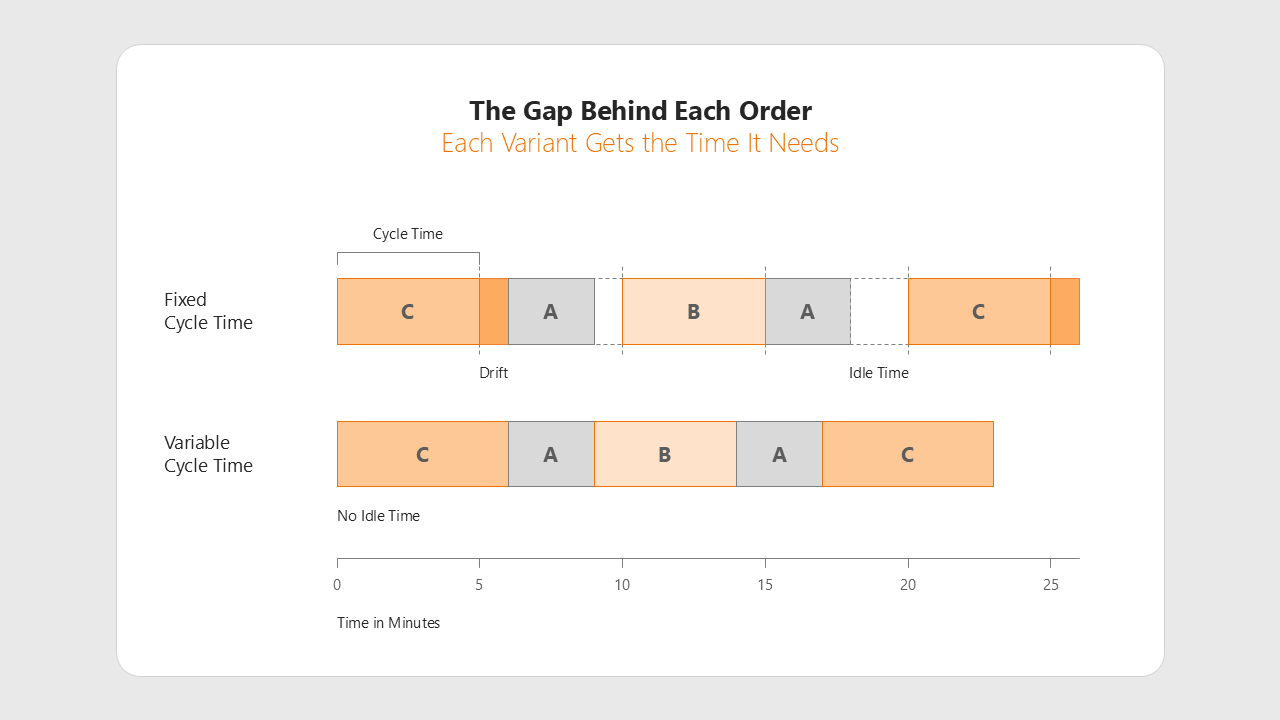
In this case, drift is not an error but is intentionally planned. The greater interval ensures that the subsequent order also reaches the start of the station one minute later. As a result, the worker begins the next order at the intended starting point again, and there is no forward drift in the form of a delayed start to work. However, the drift area limits the maximum permissible factor: For a factor of 1.2, a workplace requires a drift area of at least 0.2 stations.
The VarioTakt: Reference Model and Cycle Time Factor in Practice
The variable cycle has become known as VarioTakt. Fendt coined the term in the tractor assembly line at its Marktoberdorf plant, taking its name from the Vario transmission manufactured there. However, the principle is not tied to any specific product. It is suitable wherever models with significantly varying assembly requirements are manufactured on a shared production line. A prerequisite is a conveyor system on which the units can be moved independently of one another at variable intervals, such as automated guided vehicles (AGVs).
An example involving three models illustrates how cycle times are determined. Model M, with a cycle time of 7:30 minutes, serves as the reference model. Based on this cycle time, the spacing on the conveyor is adjusted:
- Model S: has a cycle time of 6:45 minutes (cycle time factor 0.9)
- Model L: has a cycle time of 9:00 minutes (cycle time factor 1.2)
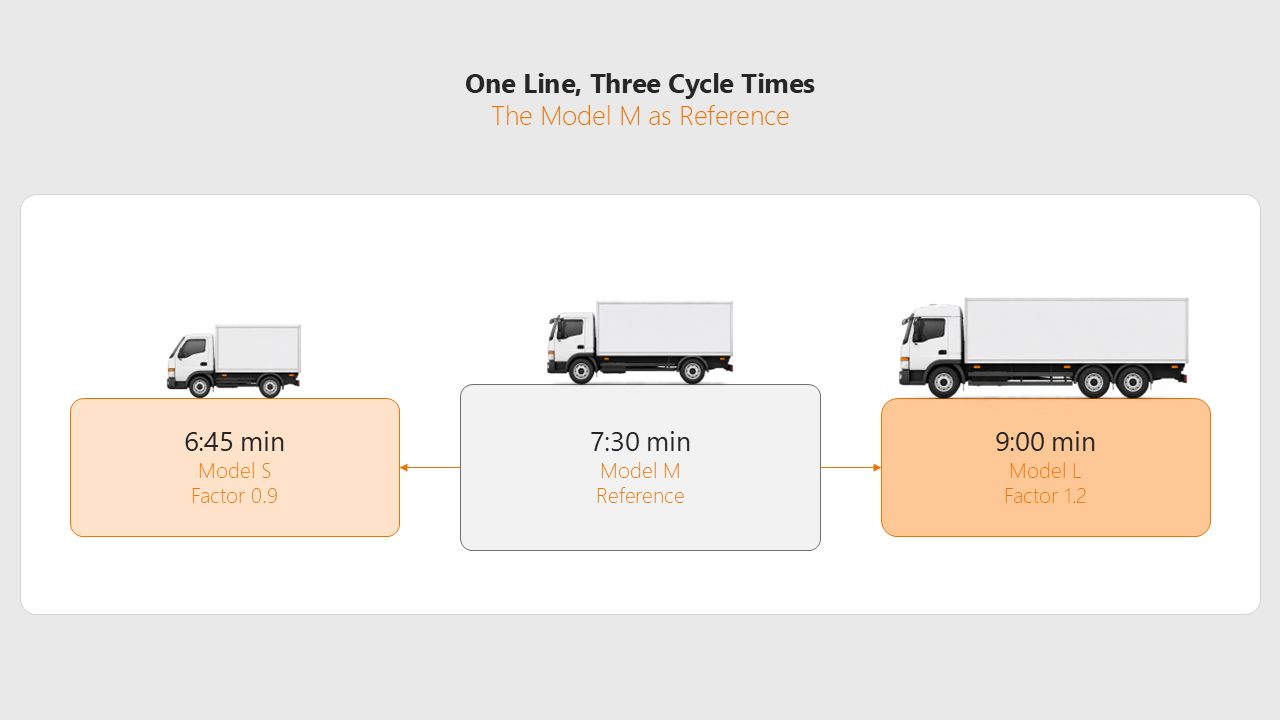
Depending on the model being produced, this causes the number of units per shift to vary, while the hourly workload becomes more consistent. The variable cycle thus compensates for differences between models. However, additional work resulting from variants within a single model may still occur. This can be handled, for example, in separate equipment bays at the end of the line.
What the Variable Cycle Time Does Not Compensate For
A longer interval between the current order and the next one provides additional time for the same order at each workplace. This makes sense when the assembly effort is higher across many workplaces. A single optional feature (such as a trailer hitch), on the other hand, increases the effort only at the workplace where it is installed. If the interval for the entire order were increased solely because of the trailer hitch, the additional time at all other workplaces would go unused, resulting in unintended idle time. Variable-cycle production is therefore well-suited for differences in assembly effort across the entire production line, but less so for locally limited additional effort associated with individual order features.
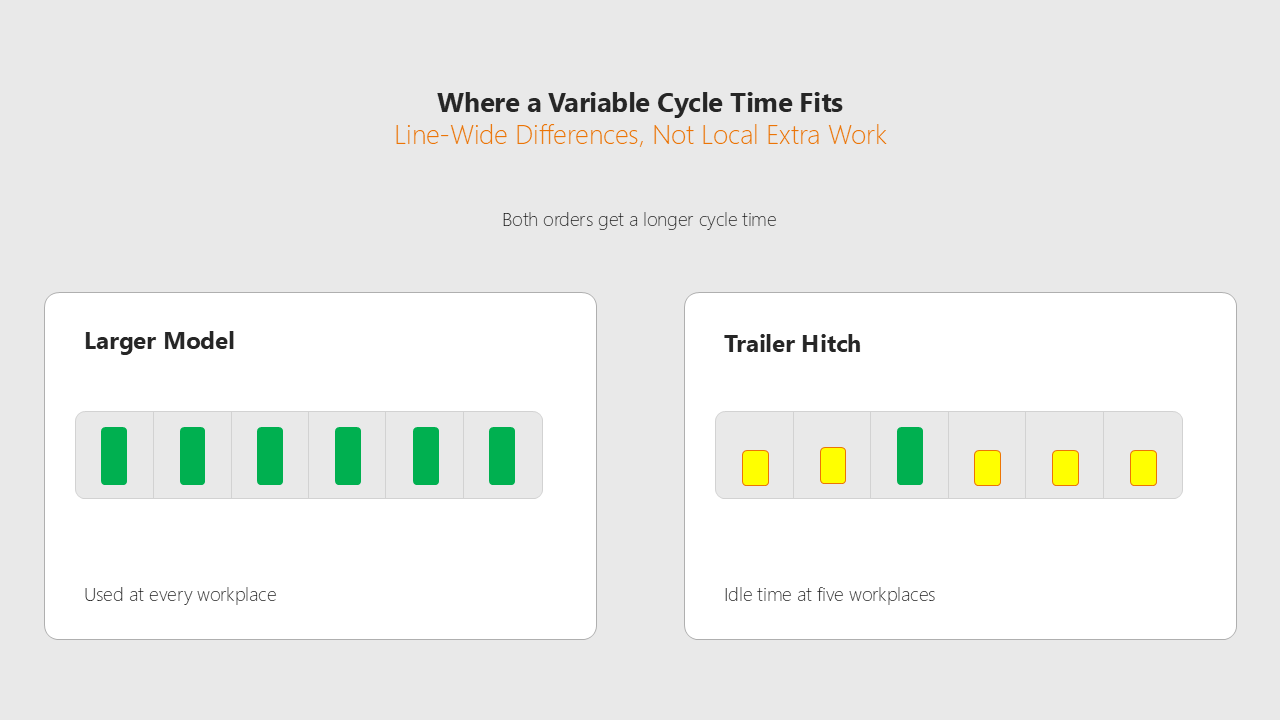
For implementation, models with similar assembly effort across the entire line are grouped into cycle time groups. Each cycle time group is assigned its own cycle time factor:
- Grouping: Group models with similar assembly requirements and determine the cycle time factor.
- Detailed line balancing: Within each cycle time group, examine how different optional equipment is distributed across the workplaces.
Line balancing therefore no longer balances a common variant mix across all models, but rather the respective mix of equipment options within each cycle time group.
„Variable cycle time can effectively compensate for differences between models. This requires that the higher assembly effort for a particular model not be concentrated at just a few workplaces, but rather be distributed evenly across large parts of the line. “


How To Check In Advance Whether the Variable Cycle Time Is Suitable for the Line
Before introducing a variable cycle, three prerequisites should be clarified:
- Flexible conveyor system: A continuous-flow system that feeds orders onto the line at variable intervals (e.g., automated guided vehicles).
- Sufficient space: There must be enough space at the stations because, when the distances between them are short, two orders may occasionally be in a station at the same time.
- Flexibility in production volume: The planning department’s willingness to accept fluctuating production volumes per shift, since output depends on the daily model mix.
Whether implementation is worthwhile depends on the specific variant mix. Therefore, the actual order program should be simulated in advance, once with a fixed and once with a variable cycle time. The scenario comparison shows whether the variable cycle time distributes utilization more evenly across workplaces and reduces drift limit violations.
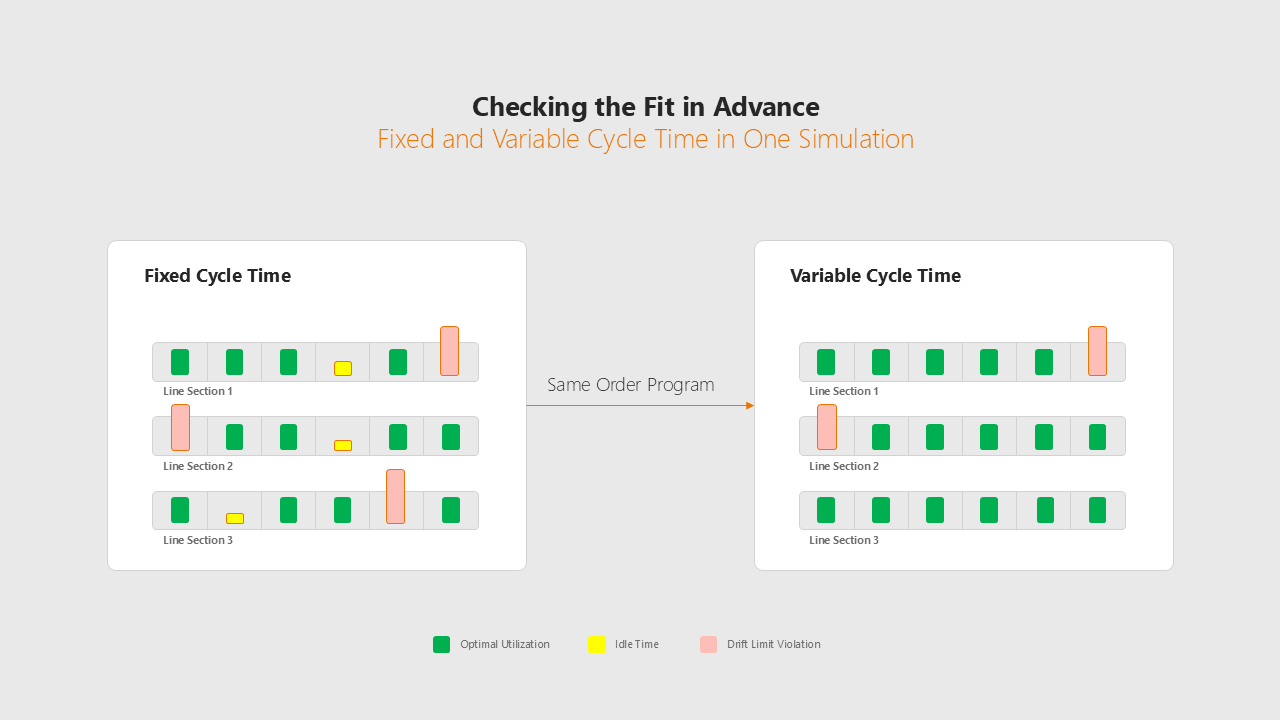
„You can use your own order program to determine in advance whether a variable cycle time is worthwhile. The scenario comparison shows the extent to which it reduces model-related differences in capacity utilization and identifies which workplaces continue to experience peak workloads. “
Why the Variable Cycle Time Enhances Planning but Does Not Replace It
Variable cycle is an effective tool for assembly lines where models requiring different amounts of assembly work across the line are produced together. Through the cycle time factor, each order is assigned the cycle time of its cycle time group. The distribution of this order’s assembly work across the individual workplaces is still determined by line balancing.
Differences caused by special equipment within a cycle time group remain and, as with fixed cycles, must be accommodated through drift areas and sequencing rules. Variable cycle time therefore does not replace line balancing, sequencing, and program planning, but it significantly expands their scope of action.
Frequently Asked Questions About Production Planning
With variable cycle times, orders are allocated different amounts of time at the workplaces depending on their assembly requirements. As a result, more complex orders move through the assembly line at greater intervals from the order following them.
In a fixed-cycle system, the same cycle time applies to all orders. Less complex orders then result in unused capacity in the form of idle time, while more complex orders result in drift. In a variable cycle, the available time is adjusted to account for the varying assembly requirements of the different models, causing the interval between orders and the number of units produced per shift to vary.
A variable cycle is suitable for production lines where the assembly requirements for different models vary significantly and these differences are similarly pronounced across all workplaces. However, a variable cycle is hardly effective at balancing out special equipment that places an additional burden on only a few workplaces.
VarioTakt is another term for the variable cycle. Fendt coined the term at its tractor assembly plant in Marktoberdorf, drawing inspiration from the Vario transmission manufactured there. It refers to the same principle: Orders are allocated varying amounts of time depending on their assembly complexity by adjusting the interval between them and the next order. This principle is not tied to any specific product.
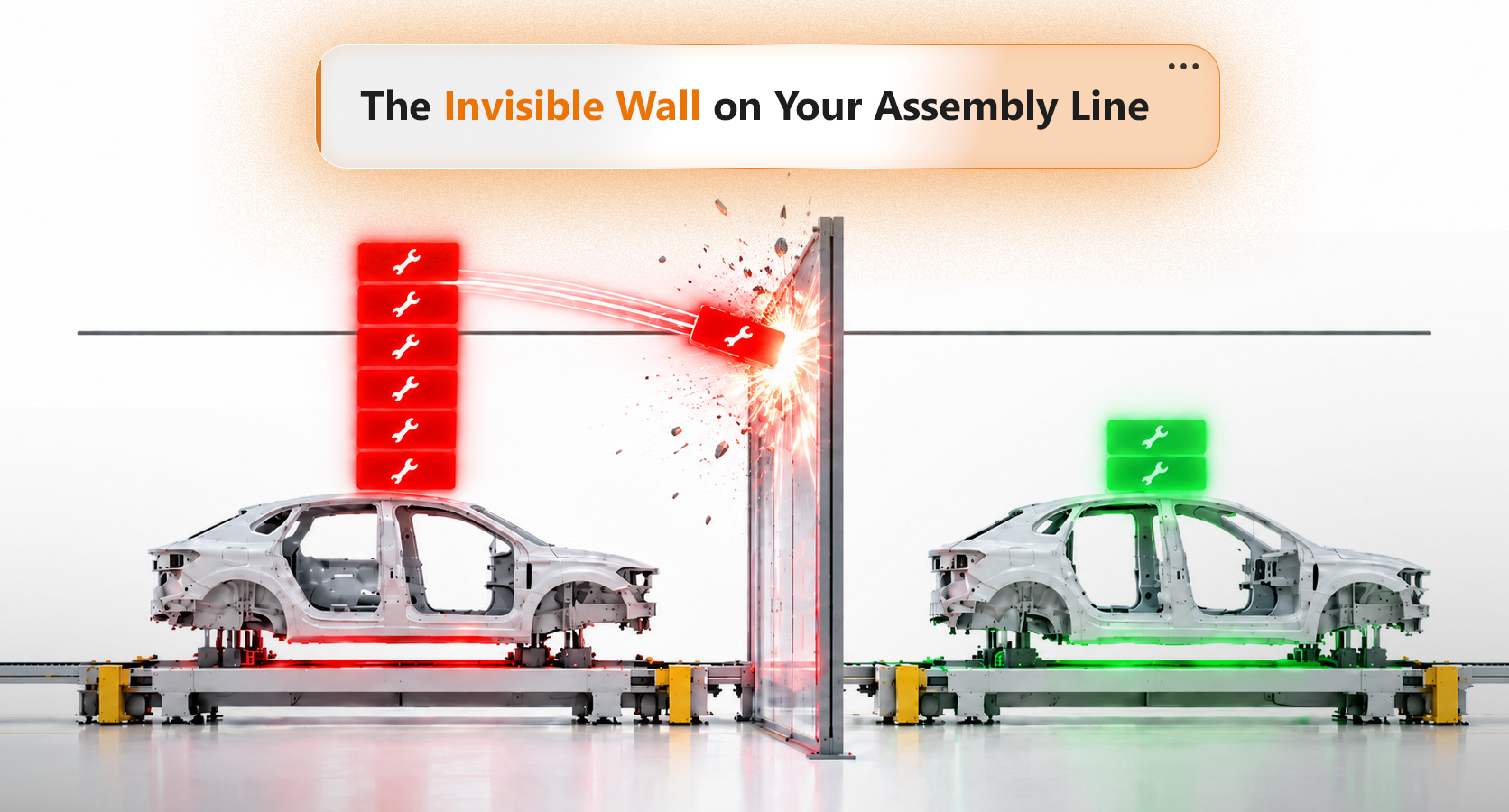
Line balancing constraints determine which workplaces a task may be moved to: an overview of the five types.
Learn More
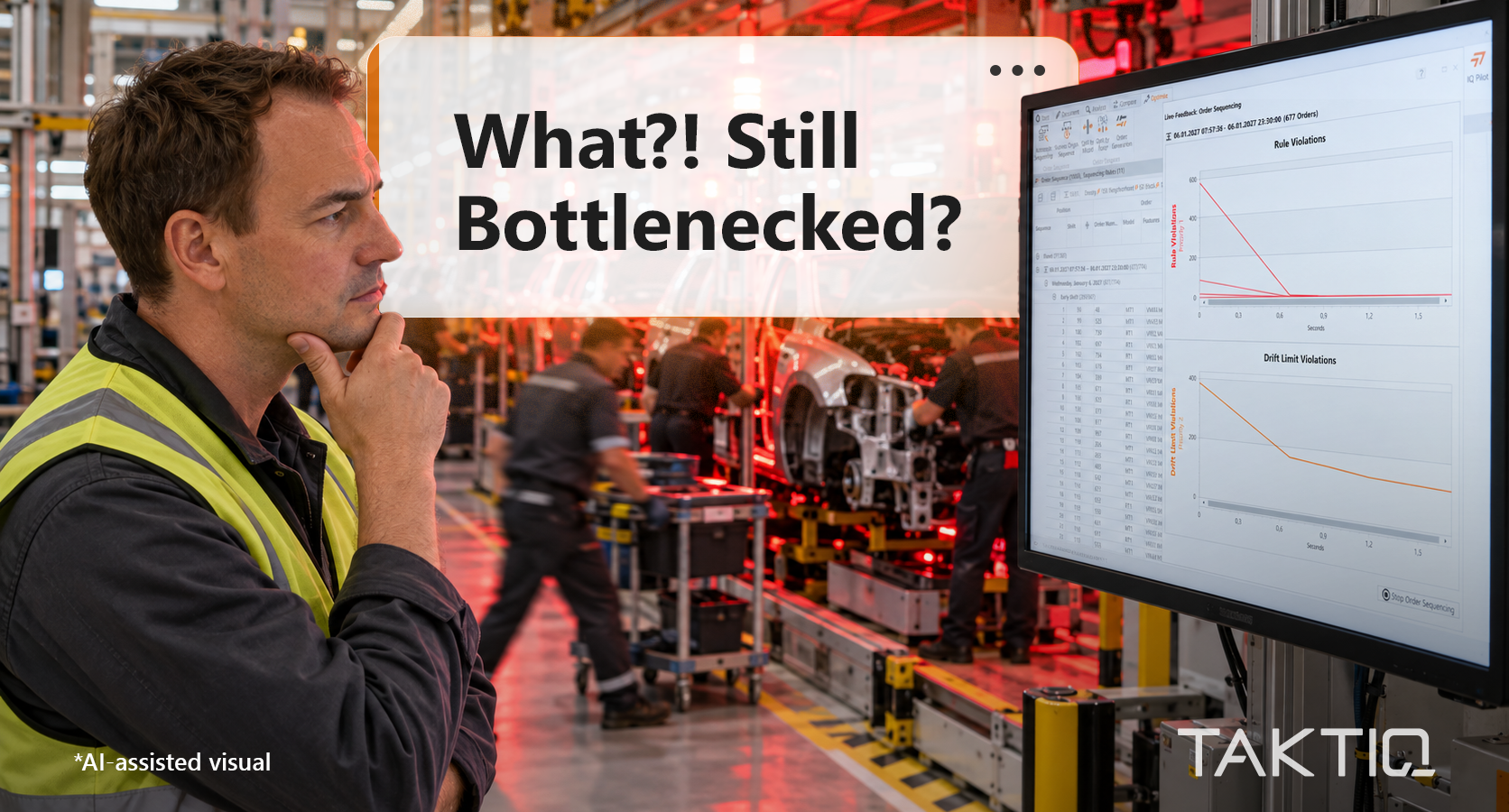
Bottlenecks Despite Line Balancing: Why Individual Workplacees Are Overloaded and How Line Balancing and Sequencing Work Together.
Learn More

Line Balancing in High-Variety Assembly: Why Manual Planning Has Its Limits and What Data-Driven Line Balancing Can Achieve.
Learn More